

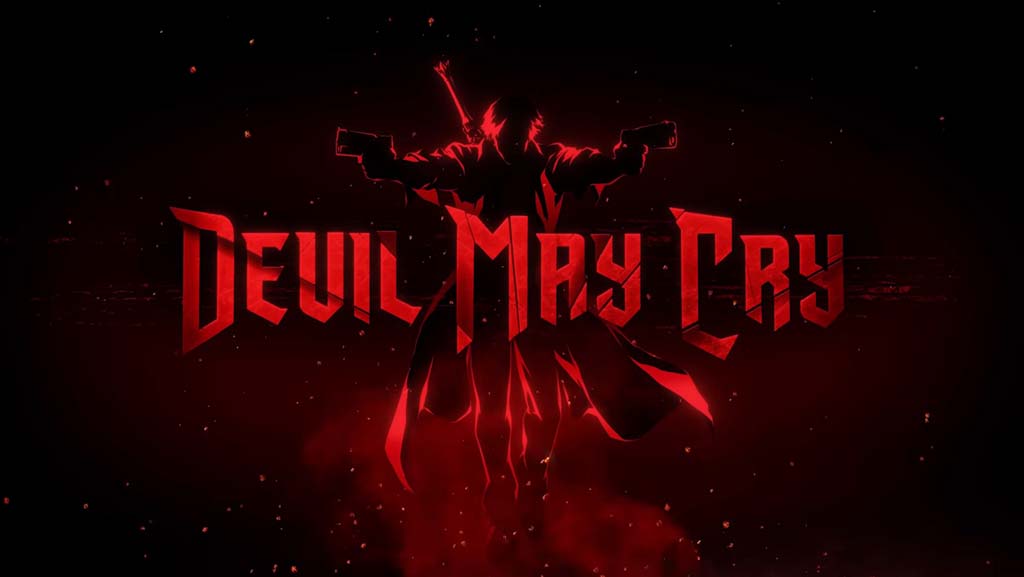
I. Introduction: A New Era for the Son of Sparda
In recent years, Netflix has been bombarding us with anime based on video games. Based on this strategic plan, it was more than natural that Devil May Cry would be among these series. Its lore, its design, and its style in general are perfectly suited for the medium. After all, Capcom—DMC’s creators—are Japanese, so the pieces were fitting perfectly for a high-octane adaptation.
As for me, DMC is one of my favorite video game franchises. Although I played the first two games back in the day, my deep dive really started with Devil May Cry 3: Dante’s Awakening, followed by the fantastic sequels DMC 4 and DMC 5. On the other hand, I never touched the DmC: Devil May Cry reimagining by Ninja Theory; I just couldn’t get along with Dante’s redesign. Fortunately, that version didn’t stay for long.
While I haven’t seen Netflix’s other gaming hits like Arcane or Castlevania yet (though Castlevania is on my watchlist), the positive buzz hyped me up to see what the studio would do with the Son of Sparda. Does it live up to those titans? Let’s dive in.

II. Narrative Recap: Guns, Swords, and Debt
I wasn’t surprised to see that the show isn’t a 1-to-1 adaptation of the game lore. It’s a unique story that keeps certain standards: Dante is a cash-strapped demon hunter doing jobs for money and stopping demons from invading Earth. Around his neck is an amulet given to him by his mother—the key to unlocking the gates to Hell.
The main villain, the White Rabbit, wants to open these gates. Having found the other components, Dante’s amulet is the last item needed to complete his plan and get revenge on the human race. Complicating things is DARKCOM, a secret government organization hunting Dante to secure the amulet for themselves. Their leader, a soldier named Mary, holds her own vendetta against demons.
Dante finds himself caught between a human military force and a demonic invasion. Throughout the season, he develops an odd relationship with Mary—a mix of trust and mistrust—as they realize their team-up is the only way to beat the White Rabbit and keep the gates shut.
III. The Heart: Dante’s “SSStyle” and Lady Mary
At its heart, the story is straightforward: a couple of heroes trying to stop a bad guy. I don’t think the show needed anything more complex, especially with the fantastic backstory episodes. However, the pacing felt a bit off towards the end. While the season consists of 8 episodes, I believe the story could have been told more effectively in 7.
As for Dante, his design is acceptable, but I have a “stronger objection” to his characterization. There was an anime in 2007 that I felt was truer to the games. In the games, Dante is glib and cool, but he carries a dark aura that I love. In Netflix’s version, he feels a lot goofier than needed—a “lighter” version of the Son of Sparda.
Additionally, the show gives him specific superhuman powers like superspeed and superstrength. While he does crazy things in the games, seeing them categorized as “superpowers” felt out of place. At least we got to see the Devil Trigger, but even that felt like it was missing some of the game’s edge. Then there is Mary (Lady). She is a badass and a great counterpart for Dante, but her visual design felt a bit inferior to what I’m used to from the source material.

IV. The Antagonists: The White Rabbit and the Masterpiece of Episode 6
The most surprising part of the show was the villain. Initially, a talking rabbit with a monocle felt out of place. However, the reference to Alice in Wonderland was clear as day and intrigued me in a twisted way to see where this was going. As the story progressed, the White Rabbit grew on me.
Then came Episode 6: “The First Circle.” This episode is a masterpiece. There is almost no dialogue—just minimal sounds and a constant, haunting musical backdrop. It tells the parallel story of two kids and how their paths crossed to eventually create the White Rabbit. It was an artistic, mind-blowing way to build a villain, using shifts in animation to distinguish the two worlds. This episode alone lifted the show from mediocre to very good.
Unfortunately, the rest of the “Demon Squad” didn’t live up to that standard. Most of them were just fodder for action scenes. Worse was the animation for these demons—they often used a pseudo-3D movement that felt completely forced and unnecessary for the rest of the show. A very poor, uninspired design choice that broke the immersion.

V. Standout Moments and the “Dredd” Influence
One thing the show excels at is action. I have to highlight Episode 4: “All Hope Abandoned.” Seeing Lady’s team locked in a building, hunted one by one by demons, was a clear reference to movies like Dredd (2012) and The Raid (2011). The atmosphere was tense and the action was raw—definitely one of the high points of the season.
Regarding the presentation, I always watch anime with the Japanese dub. The voice acting was beautiful, especially for the White Rabbit. I’ve rarely heard a bad Japanese dub, and this was no exception. I was also glad the show wasn’t censored; the scenes were bloody and raw, exactly as they should be. And that Raccoon City easter egg? A cool nod, even if it’s just a “Resident Evil” crossover dream for now.
VI. The Climax: The “Second Ending” Struggle
The final battle against the White Rabbit in the last two episodes left me feeling “off.” After Dante beats the demon army, I expected a proper duel. Instead, we got what I call a “second ending.” The White Rabbit mutated into a fully demon, oversized form. I hated it. I would have much preferred Dante and the Rabbit to fight at their normal scales. Seeing the villain transform into a street-fighter-like giant was a disappointment. Furthermore, the final fight didn’t feature enough of Dante’s Devil Trigger, and Lady Mary’s role felt like she was just there to land a “critical hit” for the sake of the plot. The synergy I wanted to see between them just wasn’t there.
Then there is the cliffhanger. The army starting a war with Hell? Building military bases and prisons in the demon world? It feels like total nonsense with no logic. While I’m excited about the Vergil tease, I’m not hyped at all about the direction of this “military war on Hell” subplot.

VII. The Visual & Audio Sensation
The animation was acceptable, but I expected more for the finale, where the choreography is supposed to be at its peak. It wasn’t a dealbreaker, but it was noticeable.
On the other hand, the music was off the charts. As a fan of late 90s/early 00s Nu-Metal, hearing Limp Bizkit’s “Rollin’” in the opening was a massive nostalgia hit. With Rage Against the Machine and Papa Roach in the mix, my 17-year-old self was jumping. I even got some serious “Matrix vibes” in certain moments.
A special reference must go to the new Evanescence song, “Afterlife.” The way that song “hugs” the events of Episode 6 creates an instant masterpiece. The theme of the episode paired with that song is truly indescribable.

Final Verdict: Is it Worth Your Time?
Netflix’s Devil May Cry is a stylish, bloody, and soundtrack-heavy ride that succeeds in its atmosphere but stumbles in its finish. It’s a “B-Rank” debut that reaches “S-Rank” heights during its experimental episodes, even if the “Dante” characterization and the “Second Ending” left me skeptical about the future.
So, was it worth it? Yes. Netflix did a good job bringing the franchise to the screen, even if it isn’t perfect. The ending is a definite low point, but the journey features interesting characters, great action, and the best anime episode I’ve seen in a long time (Episode 6).Mood Rating: B-Rank. I’m hoping Season 2 takes this foundation and raises the bar with the addition of Vergil. Will it hit an S-Rank? Only time will tell.
