
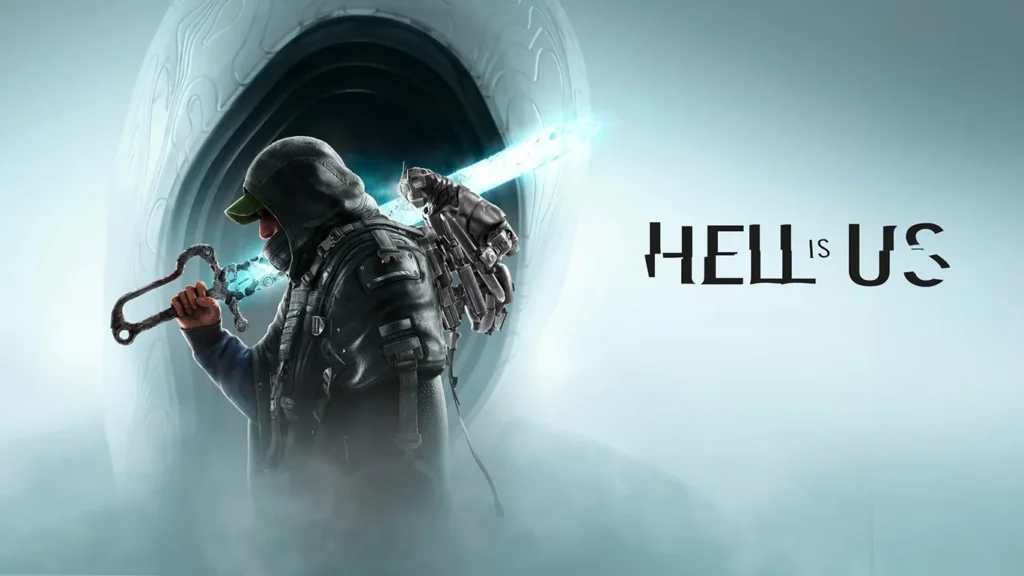
Developer: Rogue Factor
Publisher: Nacon
Available on: PC (Windows), PlayStation 5, Xbox Series X/S, and Nintendo Switch 2
Release date: September 4, 2025 (PC, PS5, Xbox Series X/S); October 8, 2026 (Nintendo Switch 2)
Time played: 40 hours (main story and side content)
Played on: PS5
First Impressions: Is It Really That Hard?
While searching for a game to play with my PS Plus Extra subscription, my eye fell on Hell Is Us. I had heard of it before, but all I could remember were mixed opinions. In fact, its difficulty had put me off. It has a reputation as a game that demands your full attention and a lot of reading if you want to unravel its mysteries.
With all this in mind, I decided to dive into its world, unsure of what to expect. From the moment the main character appeared on screen and I started wandering the game’s world, I got the impression I was playing a soulslike. A couple of minutes later, I met the first NPC and could choose topics and questions to learn more about the place and what had happened to it.
That was it. The game pulled me into its lore, and I just wanted to explore and discover as much as I could. Was I right to be put off? Is it really as difficult as they say? Keep reading to find out how much I enjoyed Hell Is Us, though with a touch of disappointment at the end.
Story and Lore: A Father, a War, and the Haze
You control Remi, who is searching for his father. The story takes place in Hadea, a country devastated by a civil war between the Palomists and the Sabinians. Many say the setting strongly recalls the Yugoslav Wars of the 1990s, and as a Greek who remembers watching news of the conflict in a neighbouring country as a kid, I couldn’t agree more.
Civil war is not Hadea’s only problem. Monsters called Hollows have begun emerging from portals, testing the faith of people on both sides. And the Hollows do not come alone. Born of human emotion, the Haze plays a huge role in the game, combining with the Hollows to form Lymbic Entities. The four emotions Remi must face are Rage, Grief, Terror, and Ecstasy. In my opinion, it is a smart way to convey what a civil war can do to people.
The game is undeniably dark, one of the darkest I have ever played. Hanged bodies, orphans, and citizens with mutated limbs as a result of their refusal to vote are only some of the sights you will encounter. In many cases the game is gory and raw, portraying the aftermath of a brutal civil war in the best possible way. Even though the enemies you fight are not realistic, learning how the Sabinians and Palomists reached this tragic escalation is shocking.
From what I got, the story and lore are the game’s greatest strength. As you progress, you uncover the full background of Hadea and how the conflict took root in ancient times. Do you have to read a lot to understand what is happening? Yes. But the writing is so good and the mythology so well built that I was never bored. I was eager to find the next note and learn more about the history of the place, like turning to the next chapter of a book.
Gameplay: Soulslike Combat, Real Exploration
As I said in the intro, my first impression was that I was playing a soulslike knock-off. Well, there is some truth to that. Remi’s movement and the combat system closely resemble those of a soulslike. You have two attacks (light and heavy), a block, a parry, and a dodge, and every action drains stamina, so you must weigh each hit and move. There are several weapon types (sword, greatsword, axes, polearm), which can be fitted with glyphs or have their state changed for special damage and abilities. Alongside your weapon, you have a drone that can also use special abilities. It’s a nice addition and a change from what we’re used to in similar games.
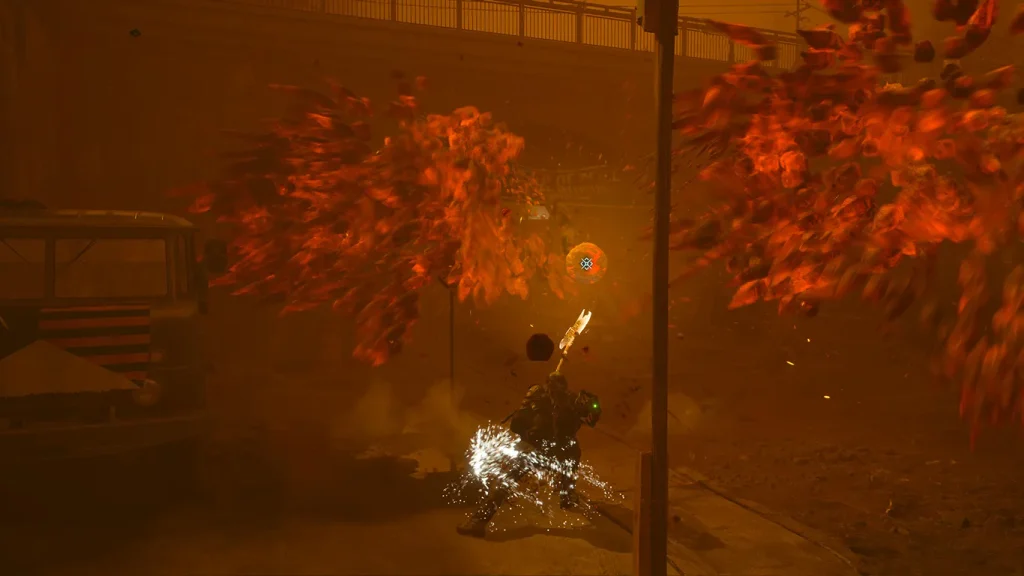
Fighting requires some strategy (you can’t charge recklessly as you would in God of War or Devil May Cry), but combat is not as punishing as in most souls games. In fact, I found it fairly easy. The combat system tries to be deep and complex in a good way, but in the end it fails to keep the player invested. By the time you find the weapon that suits you and the abilities you like, battles become repetitive and almost mechanical. On the other hand, every time you hit an enemy, you can recover some health and Lymbic energy by pressing R1 at the right moment. It feels odd at first, but once you get used to it, it is a useful and distinctive feature.
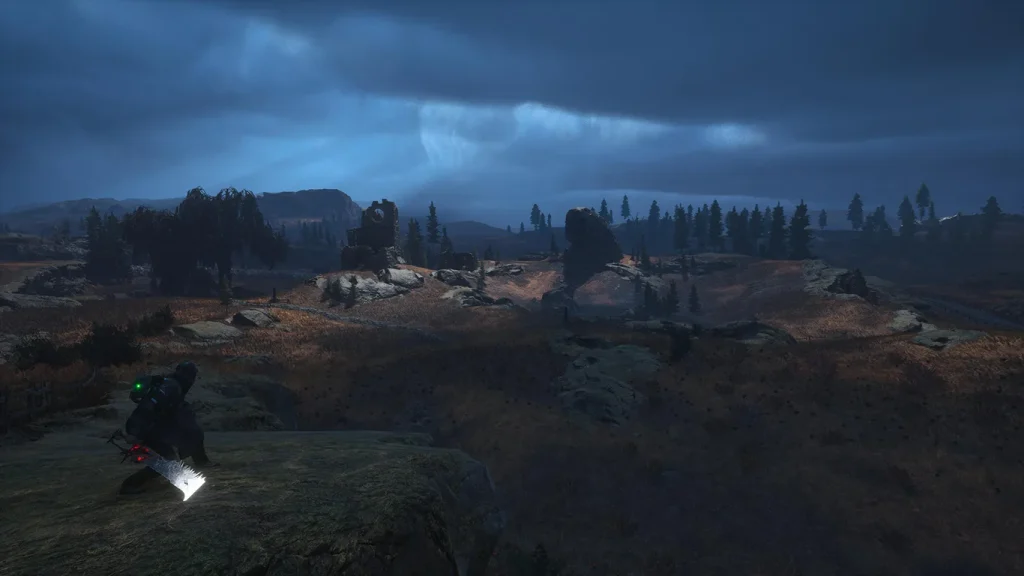
What I enjoyed most was the exploration. Hell Is Us doesn’t make anything easy for you. Forget maps, markers, quest lists, or a compass. In every area, you have to learn the paths yourself, climb ladders, unlock shortcuts, and find secrets. The world design is another element reminiscent of souls games, though the map is not unified. You choose which area to explore or return to, and the game leans heavily on backtracking.
The world is full of puzzles and riddles. Mystical doors and underground passages wait to be discovered through careful observation of your surroundings and clues in manuscripts. To tell you the truth, it has been a long time since I played a game that doesn’t hold your hand and lets your own effort decide what you discover. This is the aspect that excited me most, and one example will show why. The game has plenty of NPCs, and some of them offer side quests (called Good Deeds in the game). At one point, you meet a woman who wants to find milk for her child and gives you some empty bottles to fill. I completed this Good Deed by remembering where I had seen the only cow and in which area. I had to work it out on my own, without any clue. It sounds simple now, but the sense of accomplishment when you finally crack it is real.
Hadea is full of NPCs and puzzles that demand your attention, which may be why many players consider Hell Is Us a difficult game. Some puzzles are part of the main story, and you can’t progress until you solve them. All you need to do is read carefully and stay alert, but I understand that not every player has the patience. For my part, I loved it and found it exhilarating. At times, I’d say Hell Is Us is a classic adventure game, where you must solve the riddle to move the story forward.
Visuals and Sound: A World You Can Feel
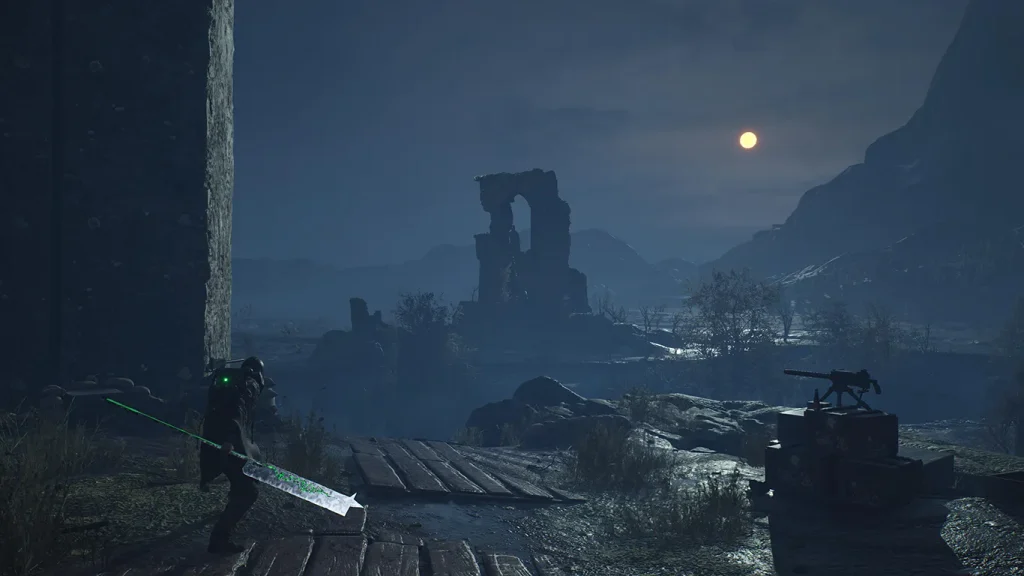
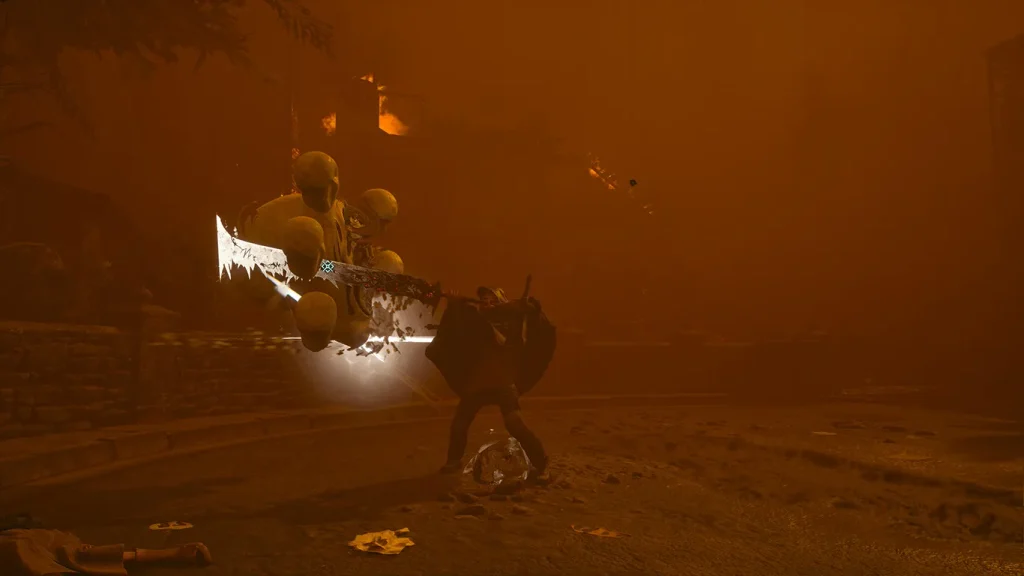
Rogue Factor used Unreal Engine 5 to build the atmospheric locations of Hell Is Us, and they did a great job. Every area conveys the heaviness and destruction left by the civil war. Burnt cities, ruined buildings, and abandoned, fog-wrapped houses are portrayed perfectly in this dystopian, mystical world. The dungeons, forests, and mountain paths are also very well designed, adding a mysterious edge to the overall atmosphere.
The character models, however, could have been better. Remi, the NPCs, and the enemies have fairly basic designs that don’t leave much of an impression. To be honest, I finished the game a couple of days ago and can’t remember the faces of many main characters. They are very generic. But since the essence of the game lies in exploration and lore, it’s not a big deal.
As for the sound, I have some advice: do yourself a favour and play with a headset on. I use the Sony Pulse 3D, and playing with them was a truly outstanding experience. The ambient music, melancholic themes, and horrific sound effects pull you into the world of Hell Is Us and never let your attention slip. My highlights? The tension of the bombs falling in Lethe and the sound every time I killed the last Timeloop Guardian. Even now, I get chills.
Performance: Smooth, With a Few Hiccups
I prefer playing in Performance mode rather than Quality, and I did the same here, since I value smooth gameplay over shiny ray-traced surfaces, especially in a game where combat demands responsiveness. I had no real issues, apart from a few frame drops here and there. Literally a few. The game runs smoothly most of the time, and I didn’t encounter any serious problems.
There was one occasion when I had to reload my last save. After a roll (dodge), my character got stuck between two objects and couldn’t get out. A disturbing glitch, for sure. Fortunately, the game autosaves quite often, and it only happened once, early on.
Another negative is that fast travel by APC between areas felt somewhat slow. SSDs in this generation have accustomed us to much faster loading. The most irritating part was watching the drone attach itself to the APC every time before it left, which is unnecessary and gets tedious quickly.
What Works and What Doesn’t
I’ve covered what works in Hell Is Us in the previous sections: amazing lore, astonishing exploration, an exceptional atmosphere, rewarding puzzles that keep you hooked, and places that challenge you to uncover their secrets. If I had scored the game at the halfway point, I might have given it a 9 or higher. However, some things don’t work along the way, especially towards the finale. Here they are:
- Lack of bosses: Where are the bosses in a title like this? There are only two in the whole game, and they are so poorly designed that it would have been better if they didn’t exist.
- Replayability: Enemies respawn when you return after visiting another area, unless you have cleared all the timeloops, in which case they stay dead. So if you go looking for Good Deeds or puzzles to unlock, you end up wandering empty areas. It makes sense story-wise, but after a few times it gets pretty boring.
- The ending: You close just another timeloop, watch the final cutscene, and that’s it. No challenge, no final boss. Did they forget to design the ending? It feels very rushed, and I don’t know whether the game has a different ending if you complete more Good Deeds or find more secrets. I don’t think so. It simply leaves you without a satisfying closure.
- Missable side quests: Maybe I’m just not used to missable side quests, but I was really bummed when I discovered I had lost a Good Deed, and later realised I had failed others as well. I assumed I could explore the world as I pleased and didn’t know the side quests had to be completed at the right time. Really disappointing.
Who Is It For?
I’ll be honest with you: this is not your typical hack-and-slash action game, so the simple answer is that it is not for everyone. It demands your full focus, otherwise you will get lost and won’t be able to progress, even in the main story. With that in mind, play it without hesitation if:
- You love no-hand-holding exploration. You don’t care about markers, maps, quest lists, or arrows telling you where to go, and, more importantly, you don’t mind listening to NPCs and reading notes to uncover the history of this world.
- You want to dive deep into a mysterious, dystopian sci-fi world full of abstract anomalies and rich lore. The atmosphere is clearly one of the game’s best points, and the world-building can truly captivate you.
- You like solving puzzles, unlocking cryptic doors, and searching for clues anywhere in the environment. As I said, there are no markers or lists, so you must be observant, use your logic, and don’t hesitate to jot down your own notes. In this respect, I would compare Hell Is Us to a classic adventure game.
- You are happy to play a slow-paced game and take your time exploring. There is no need to rush. Explore the areas, return to places you have already visited, and search everything inch by inch.
Final Verdict
Hell Is Us was a magnificent journey for me right up to the end. The lore, the exploration, and the puzzle solutions and Good Deeds I figured out by myself were all great. But the flat ending left me somewhat dissatisfied, and all I could think was, “That was it?” It definitely deserved a better closure, and that’s a real shame, because the developers clearly put great effort into this game. I’m hoping for a sequel (the lore can easily support one) that will fix and enrich everything Hell Is Us is missing.
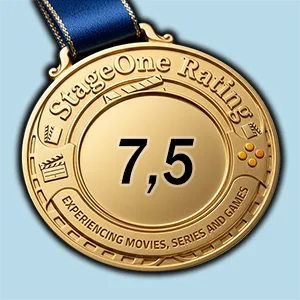
My StageOne score: