

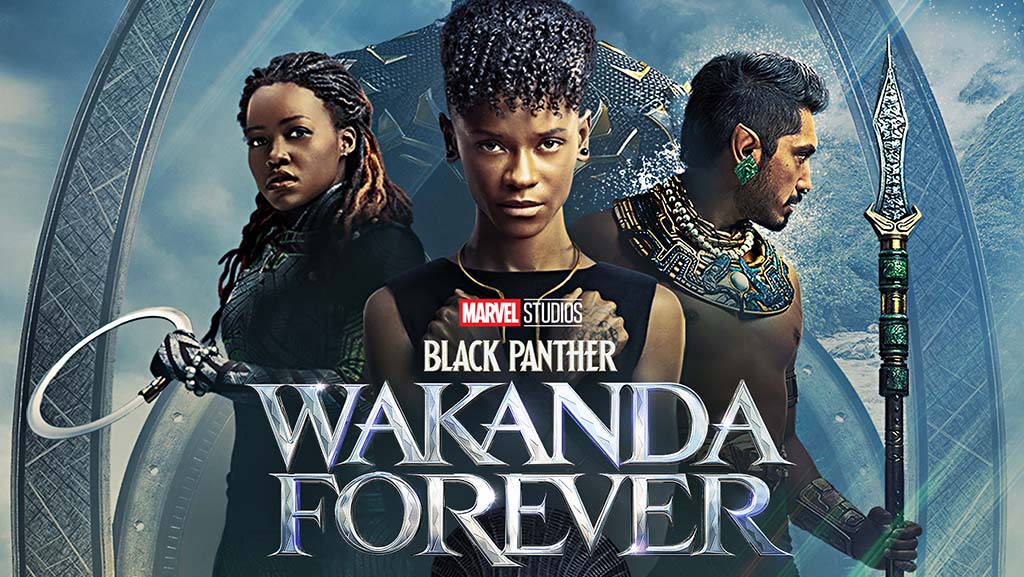
Spoiler Warning: This post contains full spoilers for Black Panther: Wakanda Forever.
I. Introduction: The Weight of a Missing King
One of the Marvel movies that slipped under my radar—perhaps on purpose—was Black Panther: Wakanda Forever. I hesitated because the loss of Chadwick Boseman felt too raw. When Marvel announced they were moving forward with a sequel, I was skeptical. How do you have a Black Panther movie without T’Challa? He was arguably the most lovable hero in the MCU. Replacing him felt impossible. However, with Avengers: Doomsday on the horizon, I finally decided it was time to see how Wakanda moved on.
II. The Narrative Setup: Silence is Louder Than Music
The movie doesn’t hesitate; it grabs you by the face. We open on Shuri’s frantic, failed attempt to synthetically recreate the Heart-Shaped Herb to save her brother. This sets the tone: the death of T’Challa was inevitable for the story, but the weight of it is staggering.
The funeral scene hit me hard—specifically the mural of Chadwick Boseman’s face. I realized then that this wouldn’t be a “fun” Marvel movie. Then came the logo. Usually, the Marvel intro is a triumphant fanfare. Here, it was silent, filled only with scenes of the King. That silence was louder than any orchestral theme I’ve ever heard. It leaves you with nothing to do but grieve.
One year later, the Black Panther: Wakanda Forever plot shifts to geopolitics. Wakanda is under fire for not sharing vibranium, which leads to the discovery of the Talokanils—an underwater tribe that also utilizes the precious metal. Their leader, Namor, views the surface world as a threat and wants Wakanda to join his war. Caught in the middle, Shuri must navigate a political minefield to prevent total annihilation.

III. The Heart: Grief as a Character Study
The emotional core of this film is its greatest success. The dark tone perfectly matches a story about loss. Letitia Wright had a massive weight on her shoulders, and while her acting is stellar, I have a “hot take” on her as the successor.
Is she convincing as the next Black Panther? In my eyes, not quite. In the suit, she looks more like a “skinny cat” than a legendary protector. Her physique and the suit design didn’t quite carry the same presence as her brother’s.
However, Angela Bassett as Queen Ramonda is magnificent. You can feel the vibration of pain in her lines. I almost feel guilty praising the acting, knowing it stems from real-life tragedy, but her speech to the Wakanda council is a career-high moment. She is the strongest personality in a nation full of them.

IV. World-Building: Talokan vs. Wakanda
A major task for this film was establishing Namor as an antihero. The nation of Talokan is a fascinating mirror to Wakanda—both use vibranium, but while Wakanda has stepped into the light, Talokan remains a hidden, underwater shadow.
Namor’s character design is brilliant. He’s a mutant with ankle wings, and the way he moves in the air—stepping on “invisible blocks”—is visually stunning. My only critique? I wanted him to be more intimidating. He is ruthless, but I wish his outward appearance matched that inner brutality a bit more.

V. The Expansion: Standout Supporting Characters
- Okoye & the Midnight Angels: I want to be honest with you. I didn’t like Okoye in the previous film. Her attitude was something I wasn’t a fan of at all. But in this movie, she is more down-to-earth and easier to feel for her. Additionally, I found the Midnight Angels suits fantastic. The only thing that left me unsatisfied is that I wanted to see more of them. I think that their appearance in the movie was very limited.
- M’Baku’s growth: Another character that was on my mind as the typical hot-head, without anything to offer. However, in Wakanda Forever, M’Baku seems to be a great, wise leader, and every word he says makes the main characters think about their actions and comforts them. A big change in his role, and I am looking forward to seeing if he will have any big role in the upcoming movies.
- Ironheart (Riri Williams): This is where the movie loses me. Riri is the reason for the two tribes to go to war, because she invented the machine that finds vibranium. Namor feels that he is threatened by it and wants to kill its inventor, while Shuri wants to protect Riri by keeping her in Wakanda. For those of you who are not familiar, Riri becomes Ironheart, a female version of Iron Man. For me, Riri’s character is unnecessary, and in general, I don’t think that the MCU needs another Iron Man-like hero. Ironheart is a character that Disney uses to make even more money and bloat the MCU with useless additions.
- Nakia: One of my favourite characters in the movie. Lupita Nyong’o portrays King’s ex-wife wonderfully, showing us an inspiring, strong female character. My hot-take? I believe that she would be a more appropriate Black Panther than Shuri. She could be the “muscle” while Shuri could remain the “brains”.

VI. The Climax: A Brutal Duel
The final battle on the Royal Sea Leopard is an interesting tactical choice. Having the fight at sea allowed for a great contrast: Wakandan tech vs. Talokanil strength. Those water bombs were a highlight—visually impressive and genuinely dangerous.
We finally got a one-on-one “villain vs. hero” duel, which has been missing from recent Marvel films. While the “dehydration” weakness felt a bit convenient, the fight was brutal. Shuri cutting the wing from Namor’s ankle was a smart, visceral moment. However, I still find the new suit design inferior to T’Challa’s; the yellow lines are interesting, but the silhouette feels “lesser.”

VII. The Resolution: A Final Farewell
The Black Panther: Wakanda Forever ending had one job: to let T’Challa go. The final scene in Haiti, where Shuri burns her funeral robes while flashbacks of her and her brother run through her mind, and then Rihanna’s “Lift Me Up”. The whole part is devastating. The chemistry they had as siblings made the reality of his absence hit like a ton of bricks.
As for the mid-credits scene revealing King T’Challa’s heir? It felt a bit forced. I understand the “legacy” aspect, but it didn’t touch me emotionally the way the rest of the film did.
Final Verdict & “Mood” Rating
Before writing my final thoughts, I should say some things about how this movie is different from the other Marvel movies. As I wrote in the beginning, the Marvel logo is silent, and the same goes for the final scene with the flashbacks. But these aren’t the only things that differ from the rest of the MCU films.
If I am correct, this is the first time that there are actual songs throughout the movie. At first, it seemed odd, but as the movie progressed i found them very fitting to transmit the feeling of the themes. And not only the loss. The first Black Panther movie was a love poem to the African tribes and black culture, and “Wakanda Forever” continues successfully in that motive.
Another thing I want to mention is that the movie is quite slow in some parts. However, I don’t say that this is a bad thing. After all, Ryan Coogler had to fit everything in this movie and at the end, the mission was accomplished. The only negative I found was the lack of male characters. Also, some characters passed unnoticed, like Valentina de Fontaine and Everett Ross, that was there only to connect the story with the upcoming movies.
So, the final verdict? Black Panther: Wakanda Forever is one special film. It had to cope with the difficult task of the loss of Chadwick Boseman, and it succeeded. I don’t say that it is the best Marvel movie ever or something like that. It’s not even in the top ten. But it is very sentimental, has interesting characters, good acting, and new entries, along with satisfying world-building. My opinion is not to miss it, and if you decide to watch it, don’t forget to bring tissues.

